Introduction
For a long time, I thought that weight gain was just a matter of diet and exercise.
If I gained weight, I would blame my diet.
If I was tired, I’d have just thought I wasn’t working out enough.
I never gave sleep any importance.
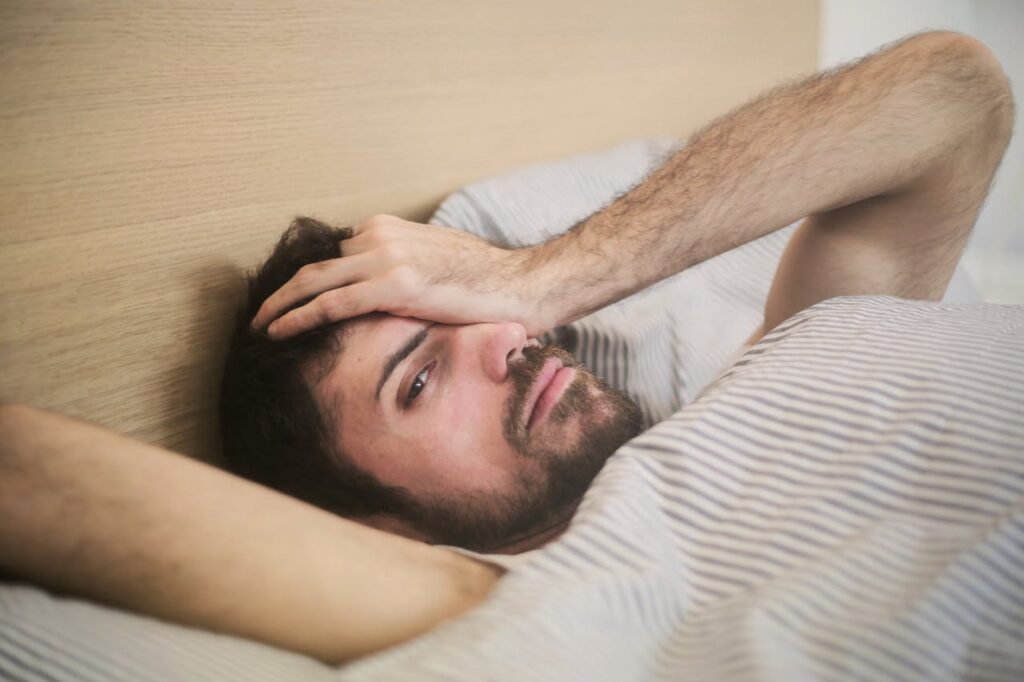
I would sleep late at night, scroll for hours on my phone, wake up tired in the morning, drink more coffee, and go about my day as if everything were fine.
Then something strange happened.
Even though I tried to eat healthy, I would still feel hungry again and again.
- My cravings would be overwhelming.
- I would also eat more breakfast.
- And losing weight seemed very difficult.
That’s when I started researching sleep.
What I found was truly surprising.
Many scientists say that lack of sleep disrupts our hunger hormones, slows down our metabolism, and increases our desire to eat. This also greatly increases the risk of weight gain.
That is, sleep is not just for relieving fatigue.
This is a huge and overlooked factor in weight control.
Sleep and weight are more closely linked than most people realize
Most of us think of sleep and weight as two separate things. But in reality, they are very closely linked inside the body.
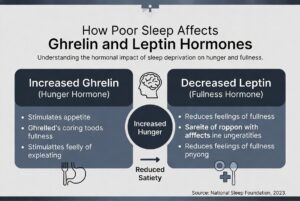
According to researchers at the Sleep Foundation, when you don’t get enough sleep (poor sleep), the hormones that control hunger and satiety are affected.
Two key hormones:
Ghrelin: This increases hunger.
Leptin: This tells you when you’re full.
When you don’t get enough sleep, ghrelin increases and leptin decreases. This makes you feel hungry more often, have a strong desire to eat more, and not feel full even after eating.
That’s why many people automatically reach for snacks after a bad night’s sleep.
Why do I crave junk food after a bad night’s sleep?
One thing I noticed over and over again was that poor sleep completely changed my food choices.
After a good night’s sleep, I enjoyed eating healthy foods (vegetables, fruits, etc.).
But after a bad night’s sleep?
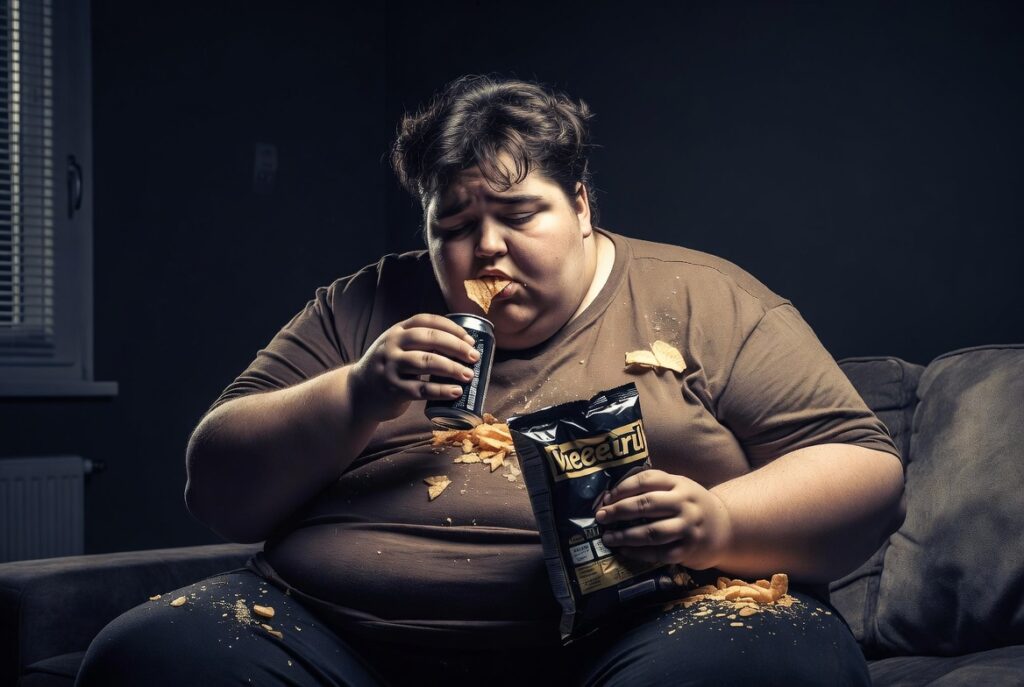
I craved sugary foods, chips, pizza, burgers—anything that would give me a quick energy boost.
Research suggests there’s a clear reason for this.
When the brain is sleep-deprived, it craves high-calorie, sweet, and fried foods more than healthy foods. It also weakens your decision-making and self-control.
So it’s much harder to resist high-calorie foods after a bad night’s sleep.
If you’ve read my previous article (“Why You Crave Sugar After a Bad Night’s Sleep”), you know how powerful this effect is.
Poor sleep can slow down your daily activities
Weight gain is not always caused by overeating.
Sometimes it can also be caused by less exercise.
I have noticed that my energy levels drop significantly after poor sleep.
Even small activities seem difficult.
I don’t feel like exercising.
Even walking straight feels like a chore.
Researchers have found that sleep-deprived people commonly experience the following problems:
- Low energy levels
- Low motivation
- Reduced physical activity
- Feeling tired throughout the day
When this is constant, the body burns fewer calories. The result is that weight gradually increases over time.
Sleep also affects metabolism (the body’s digestive system)
This was the one I found most interesting.
Your body processes (digests) food according to the quality of your sleep.
According to experts at Harvard Health, poor sleep impairs insulin sensitivity. Insulin is the hormone that transports sugar from the blood to the cells. When insulin does not work properly, the body cannot use sugar properly.
This can lead to these problems:
- Poor blood sugar control
- Affected appetite
- Increased fat storage
- Slowed metabolism
A single night of poor sleep may not make much difference, but months of consistently poor sleep can lead to these problems and make it difficult to control weight.
The Hidden Role of Cortisol
Another important thing that many people overlook is cortisol.
Cortisol is called the stress hormone.
When sleep is not good, cortisol levels remain high for a long time.
High cortisol levels cause these problems:
- Excessive appetite
- Emotional eating (eating to satisfy your hunger)
- Strong cravings
- Accumulation of fat around the belly
That is why when times are stressful, sleep is disrupted and weight gain occurs.
These two problems make each other worse.
Why does eating late make things worse?
For years, I used to eat dinner very late and eat something before going to bed.
I had no idea how important it was.
But when I read about the science of sleep, I realized that this habit was damaging both my sleep and my weight.
Eating a heavy meal late at night:
- The quality of sleep deteriorates
- Digestion continues to work while you sleep
- Sleep is not deep
- The body stores excess calories
That is why I also wrote an article:
“How Eating Late at Night Affects Your Sleep Quality (Easy Solution)”
The timing of meals turned out to be much more important than I thought.

Can better sleep really help you lose weight?
Many researchers now believe that improving your sleep can greatly aid in healthy weight loss.
But remember:
Sleep is not a magic bullet for weight loss.
It only supports it.
When people get good sleep, they typically see these benefits:
- Cravings decrease
- Make better food choices
- Increase energy and motivation to exercise
- Easier to maintain healthy habits
It creates a virtuous cycle.
Better sleep → Better decisions → Achieving a healthy weight goal becomes easier.
The brain connection that most people overlook
One thing I found very interesting was how deeply connected sleep, hunger, and the brain are.
Whenever I had poor sleep, I felt mentally sluggish.
I lost focus.
I had difficulty deciding between good and bad.
Researchers say that sleep deprivation affects the parts of the brain responsible for self-control and decision-making.
That’s why it can be hard to eat healthily when you’re sleep-deprived.
I’ve also written a separate article on this topic:
“Why Your Brain Feels Sluggish After Poor Sleep (and How to Fix It)”
Because brain fog and poor food choices often go hand in hand.
What do sleep experts recommend
Sleep experts generally recommend:
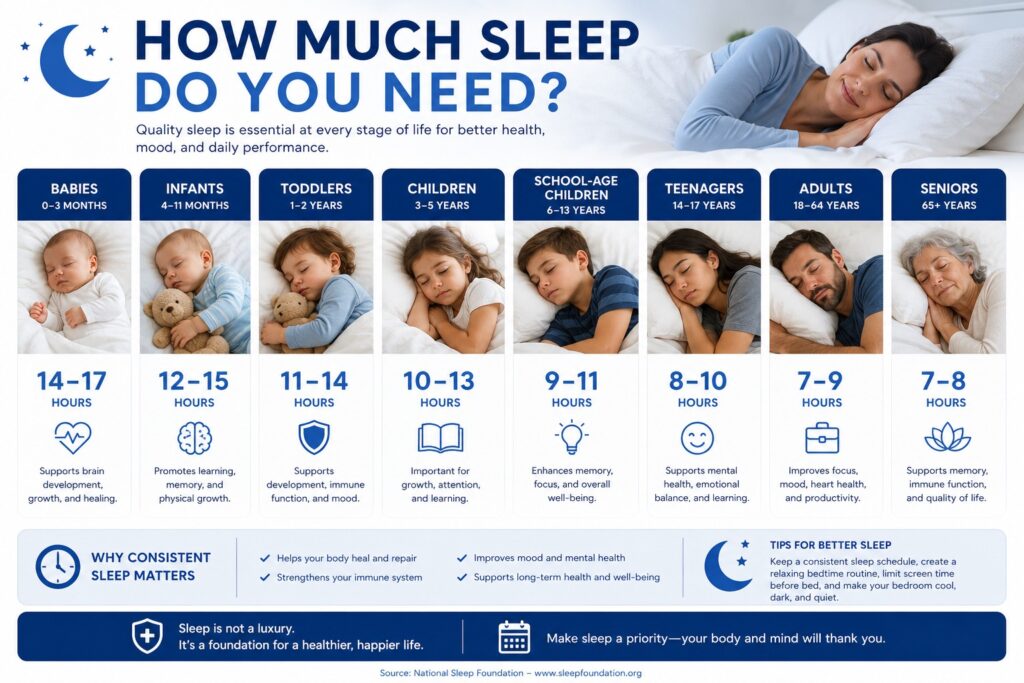
- Getting 7 to 9 hours of sleep a night
- Going to bed and waking up at the same time every day
- Reducing the use of mobile phones, TV, and screens before bed
- Drinking less coffee, tea, etc. (caffeine) after noon
- Keeping the bedroom dark, cool and quiet
These things sound very simple to hear.
But when you do them every day, they can make a huge difference in your sleep and health.
Most importantly:
Instead of making big changes all at once, keep repeating small habits every day. They work better in the long run.
What has benefited me personally the most?
I didn’t change my life overnight.
Instead, I focused on a few simple habits:
- Going to bed at the same time every night
- Spending some time in the early morning sunlight
- Reducing phone use before bed
- Eating dinner early
- Treating sleep as important as food and exercise
Within a few weeks, I noticed a surprising difference:
- My cravings decreased
- I had more energy throughout the day
- Eating healthy foods and exercising became easier
The biggest lesson was this:
I stopped thinking of sleep as wasted time.
I now see it as an investment in my health

When Weight Gain May Be Due to Sleep Problems
If you experience these problems repeatedly:
- Fatigue despite getting enough sleep
- Loud snoring
- Waking up frequently at night
- Excessive hunger and cravings
- Weight gain for no apparent reason
It might be a good idea to talk to a doctor or sleep specialist.
Lack of sleep and some sleep problems (like obstructive sleep apnea) can affect both weight and sleep.
Many people suffer from these problems for years and don’t even know it.
Final Thoughts
For years, I thought that weight gain was just a matter of diet and exercise.
Both of those things are really important.
But sleep is just as important.
The more I learned about the science of sleep, the more I realized that poor sleep affects almost everything in weight management.
It affects:
- Appetite
- Cravings
- Metabolism
- Energy
- Decision-making ability
If you’re working hard to lose weight, eating healthy, exercising, and still feeling tired and not losing weight, instead of focusing on diet and exercise alone, check your sleep.
Sometimes the missing piece isn’t a new workout.
Sometimes better sleep can make all the difference.