
Introduction
For a long time, I thought that my cravings for sweets were simply a result of a lack of self-control.
Whenever I didn’t get a good night’s sleep, everything seemed so difficult the next day.
Even after eating breakfast, I felt tired, mentally weak, and hungry.
By midday, I would crave coffee, chocolate, chips, or something sweet.
At first, I blamed stress. Then my diet.
But eventually, I understood the real problems:
The problem wasn’t food; it was sleep.
When I learned how sleep deprivation affects the brain and hunger hormones, everything became clear.
Sleep doctors say that lack of sleep increases hunger, cravings for sweets, poor metabolism, and emotional eating.
That is, your body isn’t actually asking for junk food but is rather trying to compensate for exhaustion.
To be honest, it explained a lot of my habits.
Sleep And Hunger Are Closely Linked
Most people think that sleep is just for relieving fatigue and increasing energy.
But according to scientists, sleep also greatly affects the hormones that control hunger.
There are two main hormones:
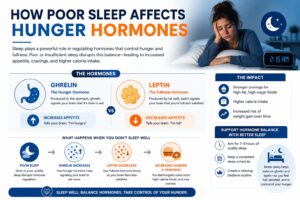
Ghrelin: It increases hunger.
Leptin: It makes you feel full.
When sleep is poor, ghrelin increases, and leptin decreases.
The result is that you feel hungry again and again and don’t feel full even after eating.
That’s why on days when you don’t sleep well, people suddenly crave these things:
- Sweets
- Salty snacks
- Fast food
- Soda
- Processed carbohydrates
I’ve noticed this myself time and time again.
When I had a good night’s sleep, it seemed easier to eat healthy. But after a bad night, my cravings for sweets and junk food would be much greater.
And it wasn’t just a mental thing; there was real science behind it.
Your Brain Is On The Hunt For Quick Energy
Sleep experts often say that our brain uses up a lot of energy throughout the day.
When we don’t sleep well, our brain feels tired and weak.
So it immediately starts looking for the fastest energy source.
And for most people, that quick energy comes from sugar.
Researchers at Harvard Health say that lack of sleep overstimulates the reward system in the brain. At the same time, the parts that control self-control and make good decisions are weakened.
These two together make a very dangerous combination.
Because of this, high-calorie foods (like sweets and junk food) seem much more delicious and beneficial than usual.
This clearly explained to me why on a day when we don’t sleep well, we don’t pay attention to healthy foods but instead immediately crave cookies, chocolate, or junk food.
My body wasn’t just hungry.
It was looking for quick energy.
Why Are Cravings Worse At Night
I realized something else important.
My cravings for sweets and junk food were at their strongest late at night.
Sleep researchers say this is very common.
When we stay up late at night:
- Hunger hormones become more active
- Emotions trigger food cravings
- The brain craves stimulation (something interesting)
- Self-control decreases
That’s why late-night cravings typically include the following:
- Pizza
- Crisps
- Ice cream
- Chocolate
- Sugary snacks
Researchers at the Cleveland Clinic say that eating heavy or unhealthy foods at night can make sleep quality worse.
It creates a vicious cycle:
Poor sleep → cravings for sweets → unhealthy foods → even worse sleep
And many people get stuck in this cycle for years without realizing it.
Why Does Stress Increase Sugar Cravings?
This part struck me the most.
When I had stressful days, my sleep was very poor, and my cravings for sweets also increased a lot.
Doctors say that stress increases the hormone cortisol in the body. This is the main stress hormone.
When cortisol is high, this is what happens:
- Sleep quality deteriorates
- Appetite increases
- Cravings for sweets and junk food become intense
- Emotions lead to overeating
That is why stress and lack of sleep are closely linked.
If the brain is not fully rested, the body tries to find comfort and energy by eating.
We often think that we need more motivation or energy.
But in reality, the body just needs rest and recovery.
You can also read my related article on
“Why Poor Sleep Is Affecting Your Mental Health (And What Helped Me Fix It)”
because mental exhaustion and poor sleep often go hand in hand.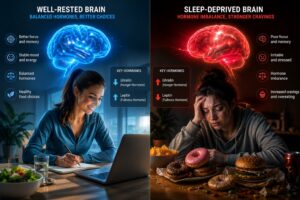
What Actually Helped Me Reduce My Cravings
I didn’t cut sugar out of my life completely.
Instead, I started improving my sleep first.
And surprisingly, it did more good than going on a strict diet.
Here are the 4 habits that made the biggest difference for me:
1. Go to bed and wake up at the same time every day
Before, my bedtime was irregular, which was making everything worse.
When I started going to bed and waking up at the same time every day, my energy level stabilized, and it became easier to control my cravings.
Sleep doctors call this “sleep consistency,” and it’s very important.
2. Get sunlight in the morning
This habit was the most surprising to me.
I started getting outside for 10-15 minutes of sunlight after waking up.
This helped my body’s internal clock (circadian rhythm) recover; my sleep was deeper, and my energy was better throughout the day.
3. Eating early at night
My biggest mistake was eating heavy meals late at night.
When I made my mealtime earlier, my sleep quality improved, and my cravings for sweets also decreased.
(I have also written a separate article on this: How eating late at night affects sleep)
4. Using your phone less before bed
I thought it was a small thing at first, but it turned out to be very important.
Looking at your phone at night kept my mind active and prevented me from falling asleep.
When I started putting my phone away an hour before bed, it became easier to fall asleep, and my sleep quality improved a lot.
Lack Of Sleep Also Affects Mental Focus
Many people overlook the fact that lack of sleep directly affects the brain.
I often felt mentally sluggish and heavy after poor sleep.
Even simple tasks seemed difficult.
Focus was scattered very quickly.
Researchers say that poor sleep affects the following:
- Memory
- Concentration
- Reaction time
- Decision-making
That is why many people feel mentally foggy, sluggish, and absent-minded on days with poor sleep.
I have written in detail on this topic in my article.
“Why Your Brain Feels Slow After Poor Sleep (And How to Fix It)”
Because brain fog and cravings are often connected.

Can Better Sleep Help With Weight Control?
Yes, absolutely!
Modern sleep researchers now firmly believe that sleep plays a crucial role in appetite and weight control.
Better sleep helps people:
- Reduce emotional overeating
- Make it easier to make healthy food choices
- Avoid snacking
- Keep energy levels steady throughout the day
- Improve metabolism
This doesn’t mean that sleep will magically fix everything.
But over time, poor sleep can lead to unhealthy habits like overeating, craving sweets, and avoiding exercise because of fatigue.
That’s why sleep is so important in nutrition and health research today.
When Sugar Cravings Can Signal a Bigger Problem
Sometimes craving sweets is perfectly normal.
But if you have these problems repeatedly, it could be a warning sign:
- Late-night binge eating
- A strong craving for sugar or sweets every evening
- Waking up tired every day
- Feeling mentally tired and stressed even after sleeping.
In these cases, poor sleep quality is affecting your body more than you think.
Sometimes lack of sleep or chronic stress also play a big role.
Final Thoughts
For years, I blamed myself for my sweet cravings.
But the truth was simple:
My body was tired.
When I started improving my sleep, my cravings gradually began to subside.
I still eat sweets sometimes now, but now I know that sleep is much more important than just relieving fatigue.
Sleep affects:
- Appetite
- Cravings
- Attention and brainpower
- Mood
- Eating habits
Sometimes your body isn’t asking for more sugar.
It’s just asking for a good night’s sleep.