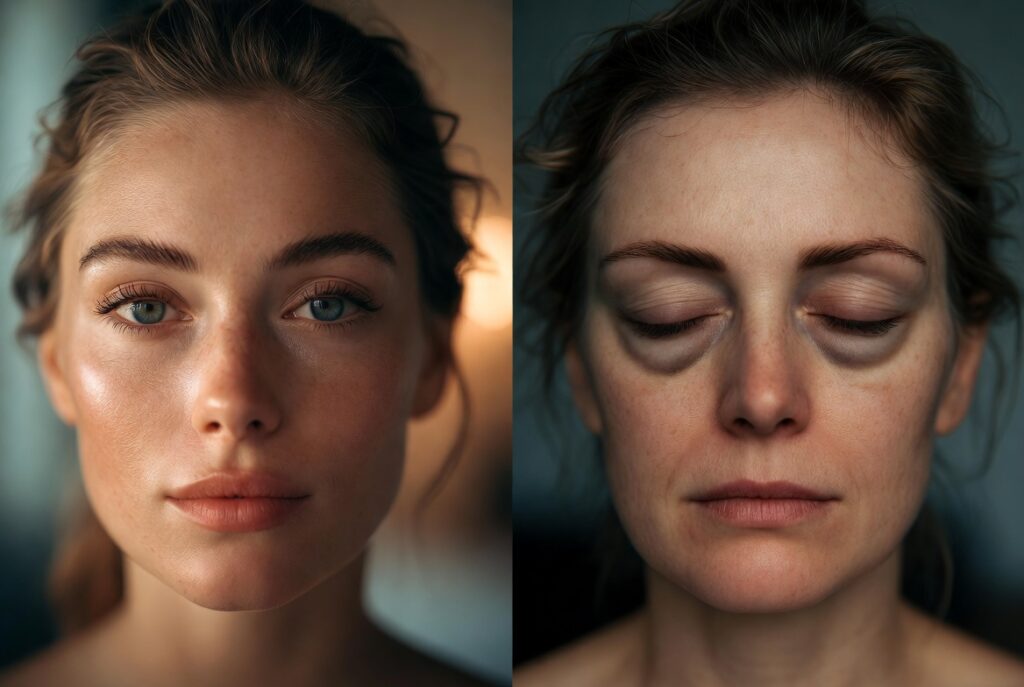
How much sleep do you need, depending on your age?
Have you ever woken up feeling refreshed after 8 hours of sleep, only to wake up exhausted the next day after getting the same amount of sleep?
We’ve all experienced it.
For years, I thought everyone needed just 8 hours of sleep. However, upon reading research from U.S. health organizations and sleep experts, I learned something surprising.
The amount of sleep we need varies throughout our lives.
A newborn, a teenager, a working adult, and an older adult all have different sleep needs.
Understanding these differences can greatly improve our energy, focus, mood, and long-term health.
According to the U.S. Centers for Disease Control and Prevention (CDC), people of different ages have different sleep needs. Getting good, quality sleep is essential for both physical and mental health.
In this guide, we’ll look at:
- How much sleep different age groups need
- What American sleep experts recommend
- How to know if you’re getting enough sleep
Why is sleep more important than most people think?
Many of us think of sleep as something optional.
We stay up late watching shows, scrolling through social media, or thinking, “I’ll think about going to bed later” while working.
But our bodies don’t work that way.
Sleep is when:
- The brain organizes memories
- The body’s cells repair
- Hormones are balanced
- The immune system is strengthened
- Energy is restored
Insufficient sleep has been linked to obesity, heart disease, type 2 diabetes, depression, and poor concentration.
Simply put:
Sleep is not a waste of time.
It’s time for your body to repair and maintain itself.
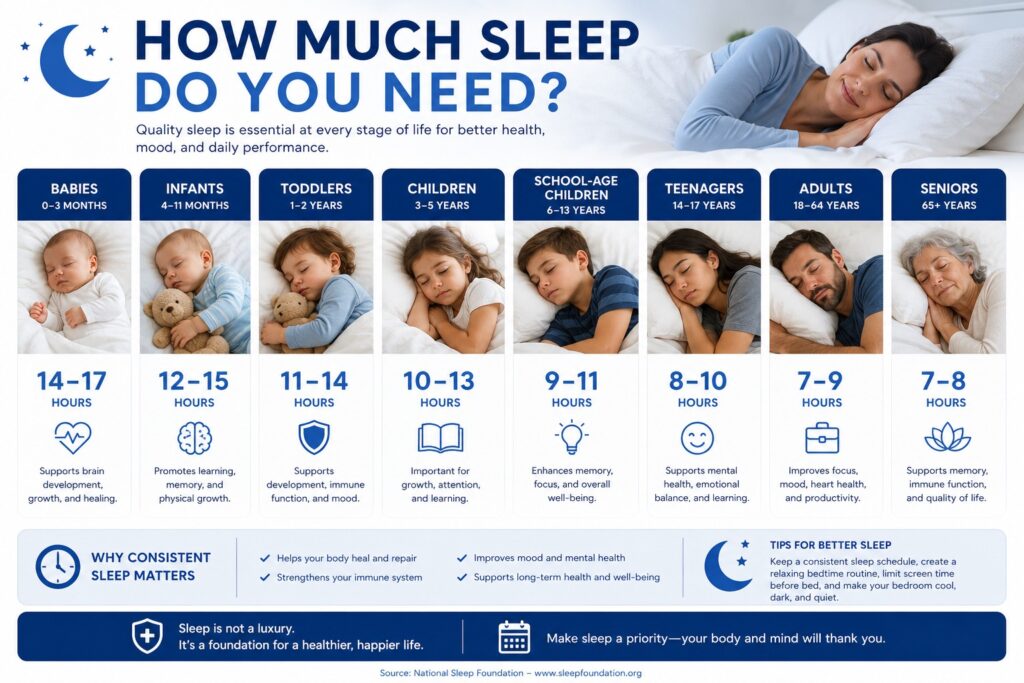
Recommended Sleep Hours by Age
The following recommendations are based on guidance from the CDC and sleep experts in the United States.
| Age Group | Recommended Sleep |
|---|---|
| Newborn (0–3 Months) | 14–17 Hours |
| Infant (4–12 Months) | 12–16 Hours |
| Toddler (1–2 Years) | 11–14 Hours |
| Preschool (3–5 Years) | 10–13 Hours |
| School Age (6–12 Years) | 9–12 Hours |
| Teen (13–17 Years) | 8–10 Hours |
| Adult (18–60 Years) | 7+ Hours |
| Adult (61–64 Years) | 7–9 Hours |
| Older Adult (65+) | 7–8 Hours |
Newborns (0–3 Months): 14–17 Hours
Newborns spend most of their time sleeping.
It’s not laziness — it’s rapid growth.
A baby’s brain and body develop rapidly in the first few months. Sleep plays a major role in this growth, learning, and physical development.
Parents often worry when babies wake up frequently.
The truth is that newborns have naturally irregular sleep patterns. Frequent waking is perfectly normal at this age.
Infants (4–12 Months): 12–16 Hours
As your baby gets older, their sleep patterns become more regular.
Many infants take naps during the day and start sleeping longer at night.
Why is sleep important?
It helps with:
- Brain development
- Immune system
- Memory building
- Physical development
USA sleep experts recommend:
Newborns need 12 to 16 hours of sleep (including naps).
Toddlers (1–2 Years): 11–14 Hours
Anyone who has raised a toddler knows that they have endless energy.
Sleep is essential to replenishing that energy
Toddlers need 11 to 14 hours of sleep a day (including naps).
Sleep at this age is a great help in learning language, regulating emotions, and learning new skills.
Establishing a consistent bedtime routine can make a huge difference at this stage.
Preschool Children (3–5 Years): 10–13 Hours
Preschoolers are learning new things at a rapid pace every day. They are developing social skills, memory, creativity, and independence. Sleep is a big help in all of these things.
When kids get enough sleep, they see these differences:
- Better behavior
- Better attention
- Emotional control (less irritability)
- Stronger immune system
Expert recommendation:
10 to 13 hours of sleep per day (including naps).
School-Age Children (6–12 Years): 9–12 Hours
As children start school, sleep begins to compete with homework, sports, video games, and cell phones/TV. This is where the problems begin.
Research shows that children who don’t get enough sleep can have problems with attention, learning, behavior, and health.
Recommended sleep:
9 to 12 hours per night.

Teenagers (13–17 Years): 8–10 Hours
enagers are the most sleep-deprived group in the United States.
Between school, social media, sports, and homework, many teens don’t get enough sleep.
According to the CDC, insufficient sleep negatively impacts teens’ academic performance, mood, attention span, and overall health.
Sleep experts recommend:
8 to 10 hours of sleep a night.
If your teen is only sleeping 6 hours a night, they’re not getting enough rest.
Adults (18–60 Years): At Least 7 Hours
This group is mostly for readers.
Most adults need at least 7 hours of sleep each night. Many people feel better when they get 7 to 9 hours.
My personal experience:
I used to feel sluggish, unfocused, and irritable on 6 hours of sleep.
My productivity and mood both improve dramatically when I get 7 to 8 hours of sleep.
Research clearly shows that consistently getting less sleep increases the risk of obesity, heart disease, diabetes, and mental health problems.
What do American sleep doctors say?
American sleep experts from organizations like the American Academy of Sleep Medicine (AASM) say that adults should get enough sleep regularly.
According to them, sleep helps:
- Repair body tissues
- Strengthen the immune system
- Improve memory
- Balance hormones
- Healthy metabolism (energy system)
- Support mental health
Getting less than seven hours of sleep on a consistent basis can negatively affect almost every part of the body.
Adults Over 60
Many people believe that older people need less sleep.
This is not true.
People aged 61 to 64 generally need 7 to 9 hours of sleep.
People aged 65 and older should get 7 to 8 hours per night.
The real issue is not the need for less sleep but getting good-quality sleep.
As we age, it can be difficult to get good sleep due to medical conditions, medications, and changes in sleep patterns.
Is Sleeping Too Much Bad?
Interestingly, the “more is better” rule when it comes to sleep isn’t always true.
Recent research suggests that neither too little nor too much sleep is good for your health.
A large study found that getting too little or too much sleep compared to what is recommended may be linked to premature aging.
This doesn’t mean that occasionally getting 9 hours of sleep is dangerous.
It’s just that finding a healthy balance is important.
Signs You’re Not Getting Enough Sleep
If you experience these symptoms regularly, you may need more sleep:
- Waking up tired in the morning
- Difficulty concentrating
- Frequent mood swings (irritability)
- Excessive hunger
- Poor memory
- Frequent illness
- Daytime napping
These are all common warning signs of sleep deprivation.

7 Easy Ways to Improve Sleep Quality
Even if you’re getting enough hours of sleep, sleep quality is very important.
Here are some simple and practical things recommended by American health experts:
Create a consistent sleep schedule
Go to bed and wake up at the same time every day.
Reduce screen use before bed
Turn off your phone, tablet, and TV at least 30 minutes before bed.
Avoid caffeine late at night
Drinking coffee or tea after noon can also disrupt your night’s sleep.
Keep your room cool and dark
A cool, dark, and quiet environment helps you get a deep, restful sleep.
Exercise regularly
Physical activity improves sleep quality.
Avoid heavy meals before bed
Eating too much at night can disrupt your sleep.
Get sunlight in the morning
Natural light helps keep your body’s internal clock accurate.
All of these habits are recommended by sleep experts and the CDC.
Final Thoughts
So, how much sleep do you need by age?
It depends on what stage of life you’re in.
Children need up to 17 hours, teens need 8 to 10 hours, and most adults need at least 7 hours of quality sleep each night.
If there’s one thing I’ve learned while researching sleep, it’s this:
We often underestimate the power of sleep.
Before you spend money on supplements, productivity tips, or energy drinks, try improving your sleep first.
Your mind, body, and future will thank you.