
Introduction
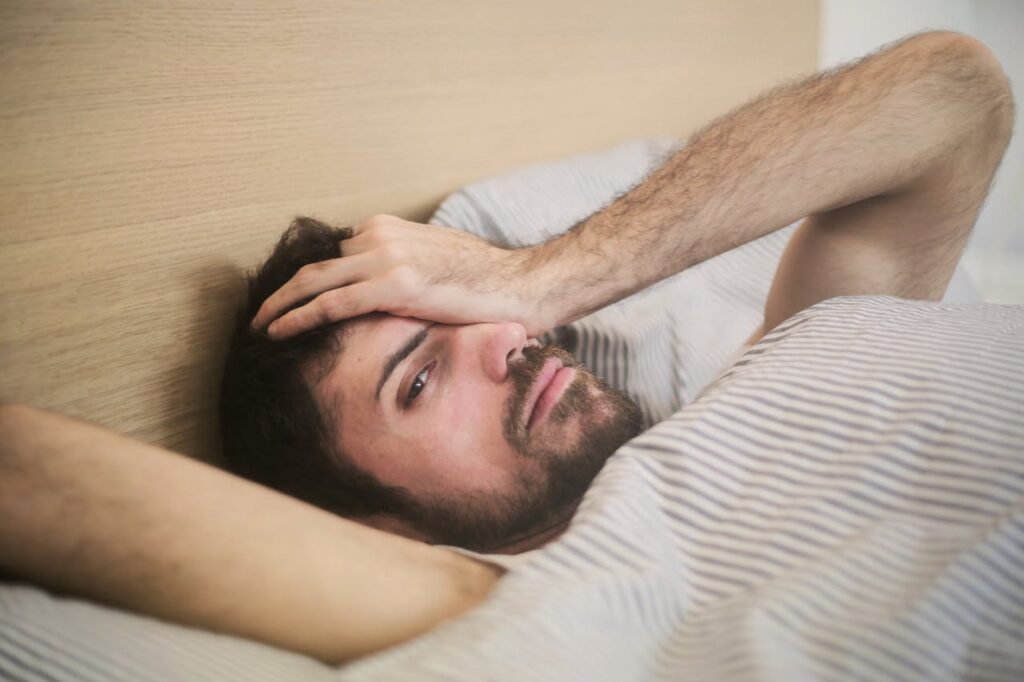
A few years ago, when I felt tired during the day, my easy solution was to take a nap.
Sometimes it was just 20 minutes, sometimes an hour, and sometimes it was longer than I had thought.
At first, I thought that the more sleep, the better. If you’re tired, a nap will definitely help.
But after a while, I started to notice something strange.
Some naps would make me feel refreshed and alert.
Some naps would make me feel grumpy, sluggish, and sleepless at night.
This got me wondering: Are naps really good, or can they ruin our night’s sleep?
After studying sleep experts, researchers, and organizations like the Sleep Foundation and the Mayo Clinic, the answer is not so straightforward.
Here’s the truth:
Naps can be both very beneficial and very harmful—it all depends on when and how you take them.
Why do we nap during the day
Most people think that if I’m feeling sleepy during the day, it means I should take a nap.
Sometimes this is true, but not always.
In fact, our bodies naturally slow down a bit in the afternoon—usually between 1 and 3 p.m. This is part of our body’s natural circadian rhythm (internal clock).
People who get a good night’s sleep also feel a little less energetic at this time.
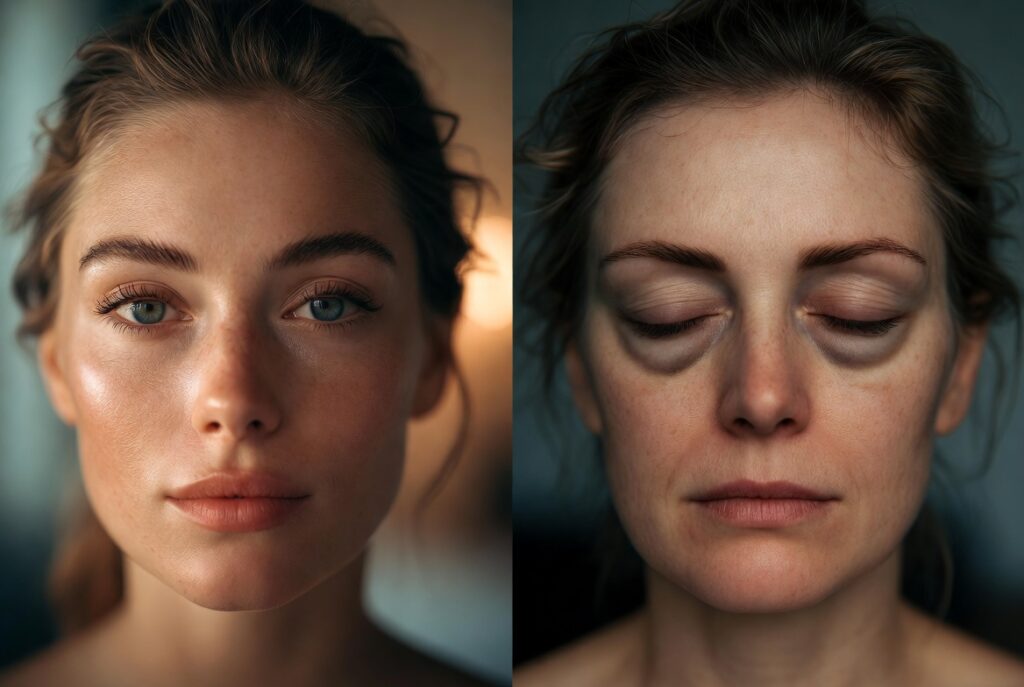
But if you’re frequently napping during the day, it can also be a sign of a number of problems, such as the following:
- Poor nighttime sleep
- Not getting enough sleep
- Stress
- Sleep apnea (a breathing disorder that prevents breathing)
- Irregular sleep schedule
So before you take a nap, check your night’s sleep first.
A nap should support a good sleep habit, not replace it.
Benefits of a Well-Timed Nap
This is what surprised me the most.
Research shows that a short power nap can have many benefits.
If taken at the right time, it helps:
- Increases alertness
- focus
- mood
- memory
- learning ability
- mental performance
I’ve seen this myself on busy days.
A short nap often makes me feel more refreshed and productive than another cup of coffee.
Sleep experts call it a power nap.
The goal is not to get a deep sleep.
The goal is just to have a quick mental recharge (refresh the brain).
For many people, it’s a great way to boost energy without disrupting their night’s sleep.
What is the best nap length?
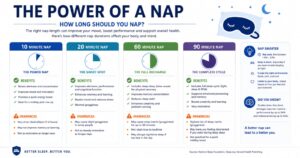
According to sleep experts, the best nap length is generally the following:
10 to 20 minutes
This is considered the best and safest length.
Why?
You don’t fall into a deep sleep during this time. You wake up feeling refreshed and alert.
My personal experience:
A 15 to 20-minute nap works best for me. I often feel worse if I take more than that.
30 to 60 minutes
This can improve memory and learning ability.
But it carries a higher risk of grogginess—meaning your brain is still sluggish and groggy after waking up.
90 minutes
This is a full sleep cycle, which is good for creativity and memory.
But for most people, this isn’t practical, and if taken late, it can disrupt your night’s sleep.
When Naps Can Really Hurt Your Sleep
This is where many people get stuck.
I used to take late afternoon naps because I felt so tired.
What was the problem?
I couldn’t sleep at night.
Sleep experts say that long or late naps reduce sleep pressure.
What is sleep pressure?
It’s the body’s natural desire to sleep that increases throughout the day (just like hunger).
The more you’re awake during the day, the better your sleep will be at night.
If you take a long nap in the afternoon, this pressure decreases.
Then when it’s time to go to bed at night, you won’t be able to sleep.
Signs that you’re napping too long or at the wrong time:
- Difficulty falling asleep at night
- Waking up frequently during the night
- Feeling restless or irritable after a nap
- Needing more sleep at night over time
The best time to take a nap
Most sleep experts recommend taking a nap in the early afternoon.
The best time:
Between 1 p.m. and 3 p.m.
Because it coincides with our body’s natural fatigue time.
Taking a late nap (in the evening) can disrupt our nighttime sleep.
My personal experience:
A 2 p.m. nap usually made me feel better.
But a 5 p.m. nap often caused me to wake up in the middle of the night.
Timing is important—more important than many people realize
What if you have trouble falling asleep at night?
If you already have these problems:
- Insomnia
- Lateness to fall asleep
- Frequent nighttime waking
Regular naps can make your problem worse.
Sleep experts say to focus on improving your nighttime sleep first, before relying on daytime naps.
This is especially important if you’ve been through all of this before.
👉 Why Do You Wake Up in the Middle of the Night? 7 Common Reasons and Their Solutions
or
👉 Why Can’t I Fall Asleep Even When I’m Tired? 7 Reasons and Fixes
In these cases, the root cause of poor sleep needs attention first.
What do sleep experts say about daily naps?
The general consensus among sleep researchers is that naps can be very beneficial if taken correctly.
Key points to keep in mind:
- Keep naps short (10-20 minutes)
- Take them early in the day (1-3 p.m.)
- Don’t rely on regular naps to make up for a lack of sleep at night
The most important point:
If you’re only getting 5 or 6 hours of sleep each night, a nap can’t replace a full, healthy night’s sleep.
They may temporarily reduce fatigue.
But they won’t solve your real problem (poor nighttime sleep).

Could Your Need for Naps Be a Warning Sign?
Sometimes excessive daytime sleepiness points to something more serious.
If you constantly need naps despite getting enough sleep, it may be worth discussing with a healthcare professional.
Potential causes include:
- Sleep apnea
- Poor sleep quality
- Chronic stress
- Certain medications
- Underlying health conditions
I think many people assume being tired is normal.
But feeling exhausted every day shouldn’t be ignored.
Your body may be trying to tell you something.
Can needing to nap be a sign of danger?
Sometimes it’s not uncommon to feel sleepy during the day.
If you find yourself constantly needing to nap, even after getting enough sleep at night, it could be a sign to talk to your doctor.
Possible causes:
- Sleep Apnea
- Poor quality of sleep at night
- Chronic stress
- Side effects of certain medications
- An underlying health condition
Many people consider fatigue to be normal, but daily fatigue should not be ignored. Your body may be trying to tell you something.
What I learned from my personal experience
After experimenting with naps for several months, I’ve learned these things:
Short naps (10-20 minutes) work much better.
Timing is key.
Naps are never a substitute for a good night’s sleep.
The biggest improvements came when I focused on improving my nighttime routine, not napping.
The things that helped me the most:
- Going to bed at the same time every night
- Reducing my phone usage before bed
- Getting some sunlight in the morning
- Not eating heavy meals late at night
These habits improved my sleep more than any nap.
👉 How Using Phone Before Bed Is Affect Your Sleep (And How To Fix It)
👉 How To Improve Sleep Quality Naturally (8 Tips That Actually Worked)
So, should you nap?
The answer: Yes — it’s good for many people.
But only in the right way:
A short nap (10-20 minutes) in the afternoon can boost your focus, mood, and ability to work.
Late or long naps can disrupt your nighttime sleep.
The only difference is the timing and length.

Final Thoughts
For a long time, I thought naps were either all good or all bad.
The truth is somewhere in between.
Taking short, well-timed naps can be a very useful tool.
But they can never replace a healthy night’s sleep routine.
If you’re constantly relying on daytime naps, it’s time to take a look at the quality of your nighttime sleep.
Because in my experience, the best solution to daytime fatigue hasn’t been taking long naps.
The real improvement came when I learned how to get better sleep at night.