

Have you ever had a headache when you first wake up in the morning?
I know it happens to a lot of people.
A while ago, I started having this happen to me several times a week. Sometimes I would have a mild headache when I woke up in the morning, sometimes I would feel pressure behind my eyes, and sometimes it would feel like someone had tied a tight bandage around my head all night.
The strange thing was that I was getting a good 7 to 8 hours of sleep a night.
I kept asking myself:
“I’m getting so much sleep, so why do I have a headache when I wake up in the morning?”
When I read the research of sleep experts, neurologists, and other doctors, I found some surprising things.
The most important thing is this:
Morning headaches are mostly related to what’s happening to you while you’re sleeping, not how long you’ve been asleep.
Let’s look at these seven common causes and find out what you can do about them.

Morning headaches are more common than people think
Many people think that headaches are just caused by stress, dehydration, or too much time spent looking at your phone/computer. These things can also play a role, but sleep itself plays a huge role.
Sleep experts say that poor sleep quality, difficulty breathing while sleeping, muscle tension, and even the wrong sleeping position can all cause morning headaches.
The good news is that most of these causes can be fixed once you know what the real problem is.
1. Dehydration while sleeping
This turned out to be a cause that I had completely ignored before.
When we sleep at night, our body loses water through breathing and light sweating. If you go to bed with a little less water in the evening, you may wake up with a headache in the morning.
Common symptoms:
- Dry mouth
- Thirst upon waking
- Dark urine
- Feeling tired
- Mild headaches
I often had this problem when I drank coffee late in the day and forgot to drink water.
Simple solution:
- Drink plenty of water throughout the day.
- Don’t go to bed dehydrated.
- Don’t drink alcohol before bed.
- Sometimes a small habit change can make a big difference.
👉 (effects of dehydration on the body)
2. Poor Sleep Quality
For years, I thought that getting 8 hours of sleep a night meant you would get good sleep.
But the truth is, that’s not always the case.
You can stay in bed for 8 hours, but your sleep quality can still be poor.
If your sleep is interrupted frequently, your brain doesn’t get enough deep sleep and REM sleep (which is the sleep you dream about). These two stages are essential for repairing, restoring, and refreshing your body and mind.
Sleep experts say that fragmented and broken sleep greatly increases your risk of morning fatigue, irritability, and headaches.
If you ever wake up tired even after sleeping through the night, the real problem may be your sleep quality.
Simple solution:
Make a habit of going to bed and waking up at the same time every day.
Turn off your cell phone, TV, and computer at least an hour before bed.
Keep your bedroom cool, dark, and quiet.
Don’t drink coffee, tea, or any caffeinated beverage after noon.
👉 Related article:
Why the brain feels sluggish and heavy after poor sleep (and how to fix it)
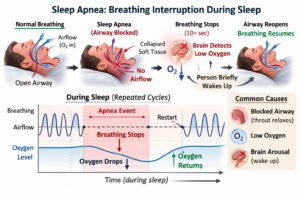
3. Sleep Apnea — A Hidden Cause
This is a very common and important medical cause of morning headaches.
Sleep apnea occurs when your breathing repeatedly stops and then suddenly starts again while you sleep. Many people don’t even realize it’s happening to them.
Common symptoms:
- Loud snoring
- Gasping or gasping for breath in your sleep
- Dry mouth upon waking
- Fatigue and sleepiness throughout the day
- Morning headaches
Sleep experts say that when breathing repeatedly stops during sleep, the amount of oxygen in the brain decreases and sleep is repeatedly disrupted, which leads to morning headaches.
What surprised me the most was how many people have been living with this problem for years and don’t even know it.
Simple solution:
If you regularly experience one or more of the above symptoms, talk to a doctor or sleep specialist right away.
A doctor can perform a sleep study to determine if sleep apnea is disrupting your sleep.

4. Stress and Body Pressure
This was the biggest surprise for me.
Even if I wasn’t feeling particularly stressed during the day, my body would carry the stress with it at night.
Sleep experts say that stress causes tension in the muscles of the neck, shoulders, jaw, and head. This tension lingers throughout the night and can wake you up with a headache in the morning.
I soon began to notice a pattern — whenever I had a stressful day, I was more likely to wake up with a headache the next morning.
Common symptoms:
- Shoulder tightness and stiffness
- Neck pain
- Feeling mentally heavy or overwhelmed
- Not being able to relax before bed
Easy solutions:
- Do deep breathing exercises
- Take a light walk in the evening
- Journaling before bed
- Reduce phone use at night
5. Teeth grinding (Bruxism) during sleep
Many people grind their teeth while they sleep and don’t even realize it.
I was shocked when my dentist mentioned it.
Teeth grinding puts a lot of pressure on the jaw muscles, which can cause pain in the head, face, and jaw.
Pains caused by it:
- Morning headaches
- Jaw pain
- Facial pain
- Tooth sensitivity
Some people grind their teeth all night but only notice symptoms when they wake up in the morning.
Simple solution:
If you suspect you are grinding your teeth, talk to your dentist. They may recommend a night guard or check your jaw position.
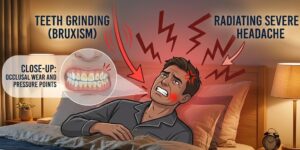
👉 (teeth grinding causes and symptoms)
6. Wrong sleeping position or pillow problem
This reason is overlooked by many people, although it is quite common.
Your neck supports your head throughout the night. If your pillow is not supporting you properly, the neck muscles become tense while you sleep.
The result? You wake up in the morning with the following:
- A stiff and stiff neck
- Tense shoulders
- Headache
I experienced this myself. The problem worsened when I used an old pillow for too long. As soon as I changed the pillow, I noticed a clear difference.
Simple solution:
Use a pillow that supports your neck well.
Keep your neck aligned with your spine while sleeping.
When the pillow becomes old, worn out, or out of shape, replace it immediately.
7. Late-night meals, alcohol, and caffeine
What you eat and drink before bed can affect both your sleep quality and morning headaches.
Eating a heavy meal late at night can cause digestive upset and disrupt your sleep.
Alcohol (liquor) causes dehydration and disrupts sleep.
Caffeine (coffee, tea, etc.) stays in your body longer than you think.
Experts say these habits can disrupt your sleep quality, which can increase your chances of getting a headache in the morning.
Easy solution:
Don’t eat heavy or fried foods before bed.
Reduce or avoid alcohol before bed.
Stop drinking coffee, tea, or any caffeinated beverage at least 5-6 hours before bed.
👉 Related article:
How eating late at night affects your sleep (and easy solutions)
When should you see a doctor?
Most morning headaches are caused by lifestyle, sleep quality, or temporary problems.
However, if you have these symptoms, consult a doctor immediately:
- Recurring headaches
- Very severe headaches
- Blurred vision or changes in vision
- Waking up gasping for air
- Loud snoring
Headaches are interfering with daily life.
It can also be caused by sleep deprivation, migraines, high blood pressure, or other medical problems, so a professional diagnosis is essential.
Final Thoughts
For a long time, I thought morning headaches were normal, and I had to just live with them.
But when I started paying attention to my sleep habits, I realized my body was trying to tell me something.
Morning headaches are often a sign that your sleep quality isn’t where it should be.
Whether the cause is dehydration, stress, poor sleep quality, teeth grinding, or another bad sleep habit, finding the root cause makes a huge difference.
If you’re waking up with a headache regularly, don’t ignore it.
Your sleep is telling you a lot about your overall health.